The Longevity Concept That Changes Everything: Compressed Morbidity for Men Over 50

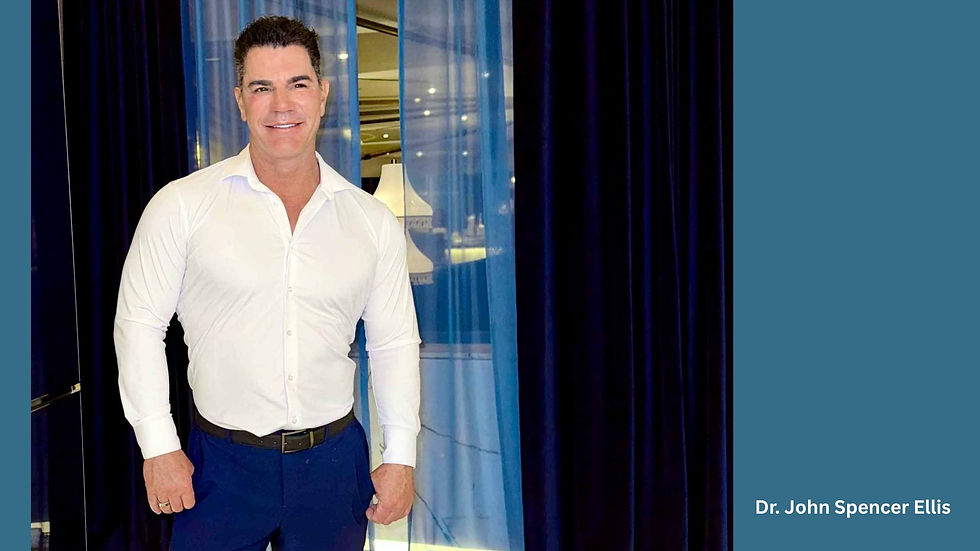
By Dr. John Spencer Ellis, Leading Men's Longevity Expert
The most valuable idea in modern longevity science does not appear on most men's radar. It is not a supplement stack, a trending protocol, or a training technique. It is a specific framing that reshapes how a man thinks about the second half of his life and what he is actually working toward. That framing is compressed morbidity — and understanding it clarifies why the work matters, when to start, and what to prioritize.
The Concept in Plain Terms
Compressed morbidity means shortening the period of chronic illness and decline that typically comes at the end of life. Instead of a long slow decline across the final 10 to 20 years, a man practicing compressed morbidity aims to remain highly functional almost to the end, then decline briefly before death.
The concept was introduced by Dr. James Fries at Stanford in 1980 and has become one of the central organizing frameworks of longevity medicine. It reframes the entire point of the work. Longevity practice is not about squeezing extra years out of a declining body. It is about keeping the body from declining meaningfully in the first place, for as long as biologically possible.
The Healthspan Gap Most Men Live With
Two vocabulary terms make the framing concrete. Lifespan is the total number of years lived. Healthspan is the number of those years lived in good health with function, cognition, and vitality intact. For the average American man, lifespan reaches approximately 76 years but healthspan ends closer to 63. That 13-year gap is where nearly all of the suffering concentrates.
Compressed morbidity closes that gap. A man whose healthspan reaches into his mid-80s and whose lifespan follows shortly afterward has lived a fundamentally different life than a man whose healthspan ended at 63 with lifespan reaching 78. The final decades are dramatically different in quality — even if lifespan is comparable.
Why the 50s Is the Decisive Decade
Biology in the 50s remains highly responsive to intervention. Hormones can be optimized. Muscle mass can be preserved and built. Cardiovascular fitness can be dramatically improved. Cognitive function can be maintained and enhanced. Yet the cost of continued neglect has become large enough that most men can now see it in the mirror and feel it in their energy across the day.
Men who begin serious compressed morbidity practice at 50 typically produce measurable transformation within 6 to 12 months and dramatic trajectory shifts across 5 to 10 years. Men who postpone the work find the window narrower with each passing decade — though never fully closed. Even men in their 60s and 70s who begin the work still produce meaningful improvement across every relevant marker.
The Practices That Actually Compress Morbidity
Modern research has converged on a specific framework of interventions that consistently support compressed morbidity outcomes.
Muscle mass preserved and developed through structured strength training. Research documented in The Lancet PURE study showed each 5 kg reduction in grip strength associates with a 16 percent increase in all-cause mortality risk.
Cardiovascular fitness developed through Zone 2 cardio and structured higher-intensity work. JAMA Network Open research showed men in the highest cardiorespiratory fitness quintile had approximately 80 percent lower all-cause mortality than the lowest.
Anti-inflammatory whole-food nutrition with adequate protein (0.7-1 gram per pound of bodyweight) preserves lean tissue and reduces systemic inflammation.
Quality sleep restores hormones, repairs tissue, regulates immunity, and consolidates cognition.
Deliberate stress management reduces the chronic cortisol elevation that accelerates biological aging.
Environmental toxin reduction addresses the accumulated burden that undermines hormonal and metabolic function.
Sustained social connection predicts longevity outcomes as powerfully as any physical intervention, according to Harvard research spanning more than 80 years.
The Integration Requirement
None of these interventions produces optimal results in isolation. The men who achieve compressed morbidity outcomes address the entire framework as an integrated system. Hormones affect muscle. Muscle affects metabolism. Sleep affects everything. This is precisely why professional coaching produces dramatically better results than self-directed effort. Integration, personalization, and consistent accountability convert intention into measurable transformation.
For more of Dr. Ellis' perspective on men's longevity, visit the complete resource for accomplished men reclaiming the second half of their lives.
Begin the Work
The Men's Health and Longevity Coaching Program from Dr. Ellis is designed for exactly this work. The 90-day fully personalized coaching engagement integrates every dimension of the compressed morbidity framework into a single coordinated program calibrated to your specific biology and goals.
Comments