John Spencer Ellis Divorce Plan Forward for Men

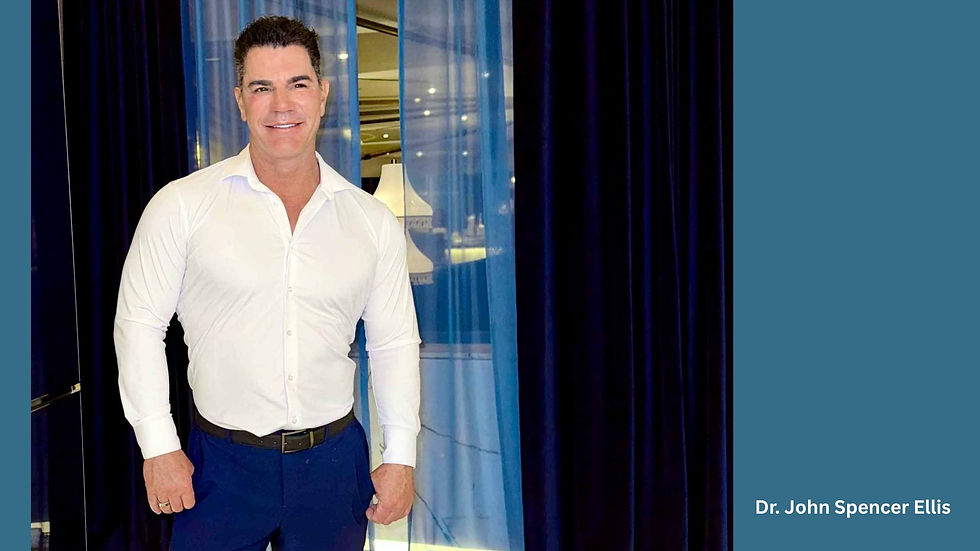
From Divorce to Renewal: A Complete Rebuild Framework for Men Ready to Reclaim Their Health, Career, and Confidence
By Dr. John Spencer Ellis, Leading Men's Longevity Expert
Divorce is one of the most disorienting transitions in an accomplished man's adult life. Everything that felt permanent — the family structure, the daily rhythm, the financial architecture, the professional trajectory, and often the man's own sense of who he is — shifts simultaneously. Most men respond by trying to survive the transition and return to some version of normal as quickly as possible. This survival mode approach is exactly what produces the specific pattern of long-term decline that afflicts so many divorced men.
The men who genuinely transform their lives after divorce take a fundamentally different approach. They recognize the disruption for what it actually is — a rare opportunity to redesign the shape of the years ahead deliberately rather than continuing a trajectory that may have been quietly failing them for decades. Understanding what this rebuild actually looks like, and how to execute it, is where the entire second half of life gets shaped.
The Health Reality Every Divorced Man Should Know
The health data on divorced men is difficult but essential to understand. Research published in the Journal of Men's Health documented that divorced men face a mortality rate nearly 250 percent higher than married men. Divorced men experience meaningfully higher rates of heart attacks, strokes, and cancer.
Long-term studies from the University of Chicago and Johns Hopkins documented that divorced individuals are approximately 20 percent more likely to develop chronic illness — heart disease, cancer, diabetes, metabolic dysfunction — and 23 percent more likely to develop mobility limitations. Research has specifically documented that divorce and living alone correlate with elevated inflammatory markers in middle-aged men but not middle-aged women. Chronic inflammation drives cardiovascular disease, cognitive decline, dementia, and accelerated visible aging — the specific pattern that shows in the mirror within months.
Mental health data is equally serious. Men are already four times more likely to die by suicide than women in the United States, and divorced men carry elevated risk. Depression, substance abuse, and hopelessness affect divorced men at dramatically higher rates than their married peers. Complicating this pattern, men typically emerge from divorce with less social support than women. Male friendships often erode across a long marriage, and rebuilding takes deliberate effort many men never make.
The purpose of documenting these consequences is not to alarm but to underscore that post-divorce health decline is real, measurable, and largely reversible when addressed proactively with integrated intervention. The men who address health during and immediately after divorce avoid the trajectory that afflicts men who ignore it.
The Professional Reset Most Men Never Fully Explore
Divorce frequently forces professional reassessment men had privately been considering for years. The specific structural constraints that had made corporate life feel non-negotiable often shift dramatically. Spouse's career considerations no longer factor in. Geographic commitments become flexible. Family financial obligations often change. What felt impossible becomes suddenly available.
This is the specific moment when consulting practices, coaching businesses, small business ownership, and portfolio careers become genuinely accessible rather than theoretical. Many men use this window to design the career they actually wanted — one that supports vitality rather than drains it, produces meaning rather than exhaustion, and aligns with the values that decades of corporate life had gradually obscured.
The insight most divorced men miss is that they bring specific assets that make successful transitions more achievable than they typically believe. Decades of professional expertise. Established networks. Executive-level skills. Credibility. Financial reserves. Often reduced family financial obligations as children reach independence. What feels like a late start is actually a well-resourced one with specific advantages younger entrepreneurs lack. The financial analysis of leaving corporate life for consulting or business ownership often differs less than expected once done carefully — and the quality of life difference can be dramatic.
The Appearance and Confidence Rebuild
Divorce forces men to look at themselves with new honesty. The physical presence that drifted across years of marriage becomes suddenly visible in the mirror. Dating again — often for the first time in decades — creates specific motivation to address appearance dimensions that had been quietly neglected. This is not vanity. It is the specific recognition that showing up as your best physical self affects every dimension of the new life being built.
The framework for reclaiming appearance after 40 is well-documented and effective. Restored body composition through structured strength training. Reduced visceral fat through anti-inflammatory nutrition. Improved skin through reduced systemic inflammation. Enhanced energy through hormonal restoration and sleep optimization. Better posture through mobility work. Men who apply the framework consistently across 90 days typically produce measurable transformation that shows in the mirror, in professional interactions, and in dating outcomes.
The confidence dimension follows naturally from the physical transformation. Dr. Ellis' central insight is that confidence in men over 40 is not primarily a mindset problem. It is a biological expression. When testosterone is restored, sleep is optimized, body composition improves, energy returns, and physical presence rebuilds, confidence returns as a natural consequence. Attempting confidence work while the underlying biology remains compromised typically fails. Addressing the biology often produces the confidence almost automatically.
The Social Infrastructure Rebuild
The dimension most divorced men neglect is deliberate social reconstruction. Male friendships often decline across long marriages. After divorce, many men find themselves with dramatically less social support than they had realized. Loneliness carries mortality risk equivalent to smoking 15 cigarettes daily according to research on social connection — a fact that dramatically underscores its importance to health.
Deliberate investment in three to five quality male friendships pays dividends across every dimension of post-divorce rebuild. This might mean reconnecting with friendships that had drifted, joining men's groups or communities, developing new connections through work or shared interests, or simply committing to regular structured time with the men who matter. Beyond friendships, community involvement produces meaning that individual pursuits alone cannot provide.
The Identity Redesign
Beyond the practical dimensions of health, career, and relationships, divorce forces identity redesign. The role of husband and family man may no longer fit — or may fit differently. The specific narrative a man had been telling himself about who he was and where he was going may require substantial revision. This dimension deserves deliberate attention rather than being left to unfold reactively.
Men who use divorce as a catalyst for genuine identity work typically emerge with dramatically greater clarity about what they actually value versus what they had inherited from culture, family, or professional expectation. This clarity shapes every subsequent decision. It informs which career transitions make sense. It clarifies which relationships to invest in. It sharpens which pursuits produce genuine fulfillment.
The Integrated Coaching Framework
Rebuilding after divorce is fundamentally an integrated project. Attempting to address health, career, appearance, relationships, and identity individually produces partial results. Addressing them as a coordinated system produces genuine transformation.
Dr. Ellis has designed two complementary coaching programs that address exactly this integrated rebuild. The Men's Health and Longevity Coaching Program is a 90-day fully personalized one-on-one coaching engagement addressing biological restoration — hormones, sleep, training, nutrition, environmental toxins, and stress management.
The Escape the Rat Race Coaching Program addresses the career and lifestyle dimension — helping accomplished men design deliberate transitions from corporate careers into freedom-based lifestyles built around consulting, coaching, business ownership, or portfolio careers.
Many post-divorce clients benefit from working through both programs. Restored biology provides the capacity to execute successful lifestyle transitions. Redesigned lifestyle sustains the biological restoration by removing the chronic stress sources that would otherwise reverse progress.
Use the Window Deliberately
Divorce is genuinely difficult. But the specific window it creates for deliberate rebuild is a gift most men will never get twice. The men who use it fully often describe their post-divorce decade as the most vibrant, meaningful, and healthy of their adult lives.
Learn more at https://johnspencerellis.com or read Dr. Ellis' detailed biography.
Comments